Dr. Kevin Chin at City of Angels Dentistry identifies the type of staining and recommends the most effective treatment — whether professional whitening, bonding, or veneers.

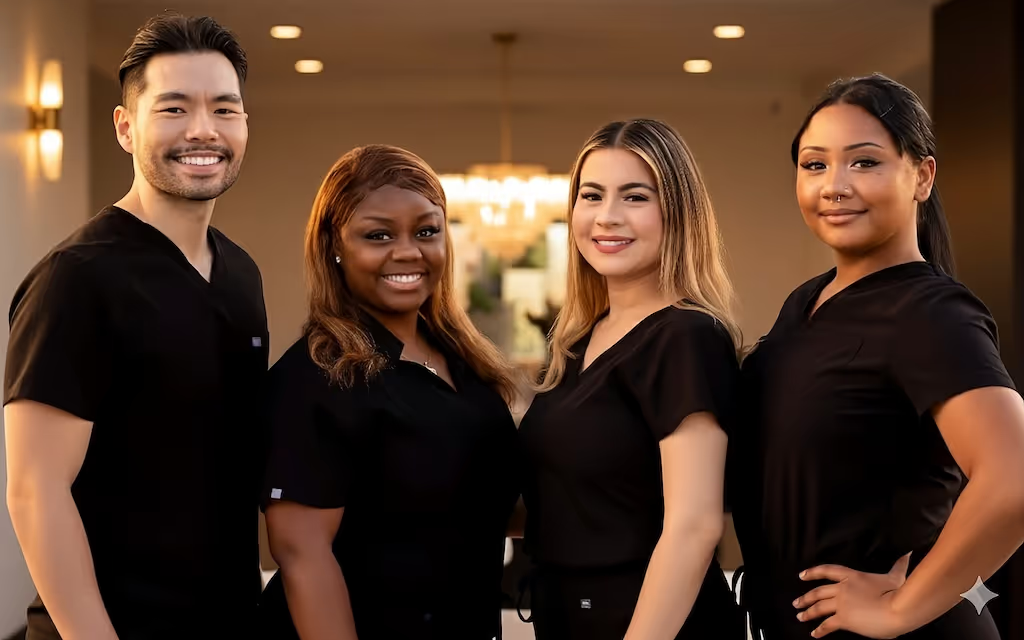

Patients who come in asking about tooth stain removal at City of Angels Dentistry are often frustrated because they've tried whitening and it didn't work the way they expected. The most common explanation is that the staining is intrinsic — inside the tooth — and therefore not accessible to bleaching agents. Dr. Kevin Chin has been addressing tooth discoloration in Downtown Los Angeles since 2018, and the consultation always starts with identifying what type of staining is actually present. That determines everything else.
Dr. Chin identifies whether your staining is extrinsic (surface) or intrinsic (inside the tooth). This determines which treatment will actually be effective.
Extrinsic staining: professional whitening with Philips Zoom or custom trays. Intrinsic staining: cosmetic bonding or porcelain veneers to cover the discoloration.
Whitening results are maintained with custom take-home trays. Bonding and veneer results are permanent and don't require ongoing whitening maintenance.
Tooth stain removal at City of Angels Dentistry starts with identifying whether staining is extrinsic or intrinsic — because the right treatment depends entirely on the type. Professional whitening, bonding, or veneers may each be the correct solution for different patients. Same-week consultations available.

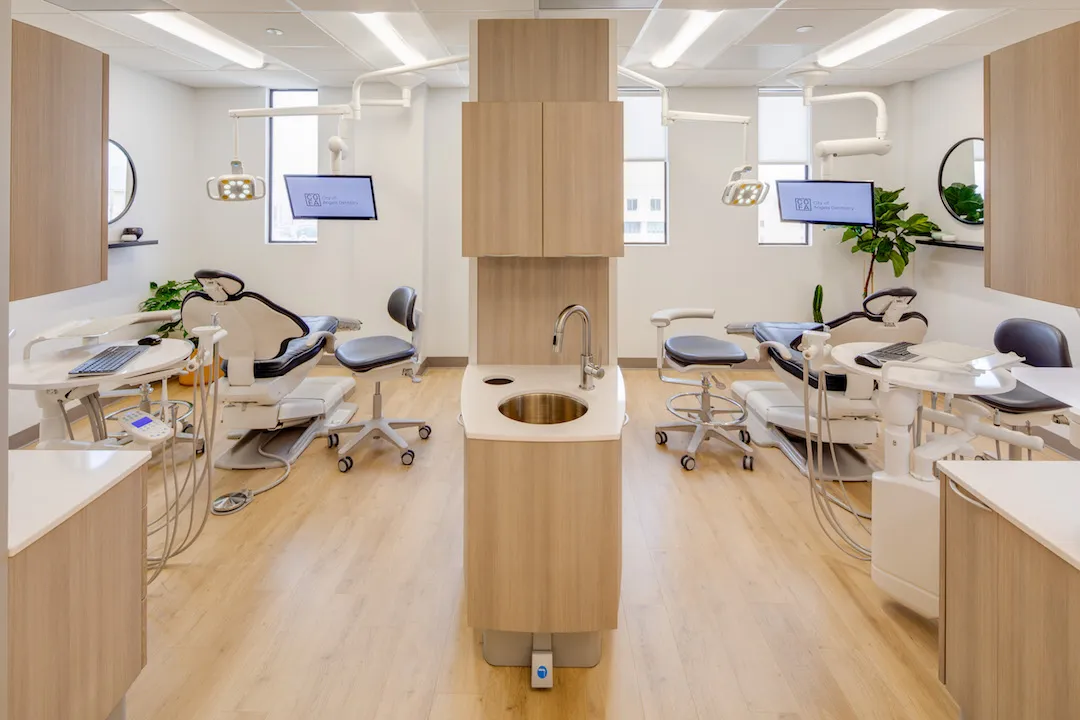
Tooth stain removal at City of Angels Dentistry involves identifying the type and cause of tooth discoloration and recommending the most effective treatment. Dr. Kevin Chin provides professional whitening for extrinsic staining and cosmetic bonding or porcelain veneers for intrinsic staining that bleaching cannot address.
Extrinsic staining is surface discoloration caused by food, beverages, tobacco, and plaque buildup. It sits on or just below the surface enamel and responds well to professional bleaching. Intrinsic staining is discoloration inside the tooth structure itself — caused by tetracycline antibiotics, excessive fluoride exposure during tooth development, dental trauma, or aging. Bleaching has limited effectiveness on intrinsic staining.
For intrinsic staining that whitening cannot adequately address, the most effective options are porcelain veneers (which cover the entire visible tooth surface) or cosmetic bonding (which masks discoloration with tooth-colored resin). The appropriate choice depends on the extent of staining and other cosmetic factors. Dr. Chin recommends the most conservative effective option at the consultation.
A professional cleaning removes surface tartar and plaque buildup that contributes to a dull or yellow appearance. It does not whiten teeth the way professional bleaching does, but it can make a noticeable improvement in surface brightness, particularly for patients with heavy tartar accumulation.
City of Angels Dentistry is at 1127 Wilshire Blvd, Suite 1100 in Downtown LA — accessible from Bunker Hill, the Financial District, the Arts District, Koreatown, Echo Park, and Silver Lake.
The most common reasons are intrinsic staining that bleaching can't reach, or starting with teeth that were already at the upper end of their natural whitening range. Dr. Chin identifies the cause at the consultation and recommends what will actually work for your specific situation.
Whitening only affects natural enamel, not composite materials. If you have visible bonding or fillings in your front teeth, whitening the surrounding teeth may create a color mismatch. Dr. Chin advises on how to manage this at the consultation.
Cost depends on the treatment recommended. Professional whitening is less expensive than veneers. Dr. Chin provides clear pricing at the consultation for whichever treatment is appropriate.
In-office Zoom whitening produces visible results the same day. Take-home tray whitening produces gradual improvement over 1–2 weeks. Veneers and bonding produce immediate results at the placement appointment.
